Blog

  • Health 101: Choosing a gym and building a stronger lifestyle

    Health 101: Choosing a gym and building a stronger lifestyle

    Front of Workout Anytime gym in Raleigh

    As we head into 2026, there are some people out there who may be considering a traditional gym after years of doing Peloton or some at-home routine. I prefer a dedicated, stand-alone gym and have usually been a member of one type or the other for the past 30+ years in an effort to keep myself in shape.

    But over the last couple of years, I’ve noticed more young people at these traditional gyms. While cycle bars and cross-fit gyms can be fun, I’m usually shocked at how much they charge so I can totally understand why the younger generation are now considering more affordable options. 

    If you’re picking a gym, I usually focus on three or four basic criteria.

    • Location: Keep it as close to home/office as possible. Within a 10 minute drive is ideal, within a 5 minute ride is perfect!
    • Group classes: If you’re a fan, then the selection of classes, schedule, and instructors will have a huge impact on your choice. If you don’t care, you can save some money by choosing a gym without classes which are usually a pricey option and addition.
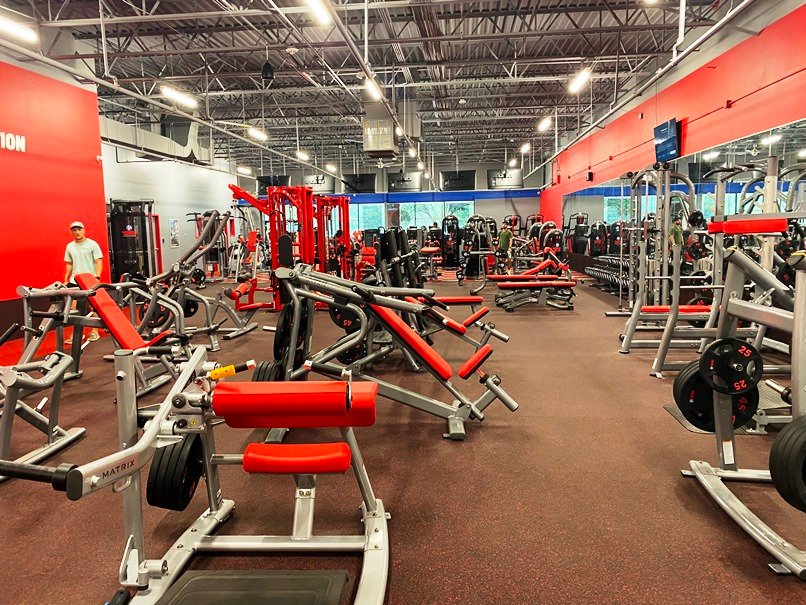
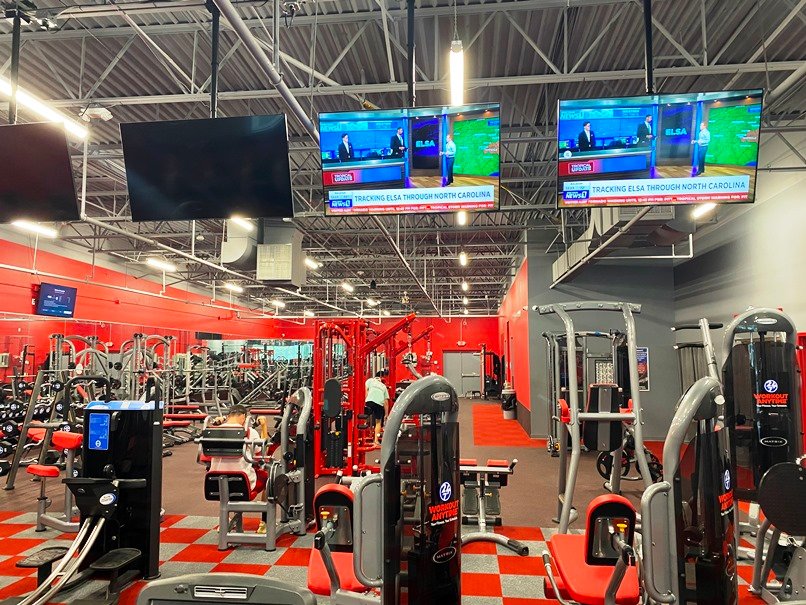
    • Machines: Usually the choices will revolve around weight machines, cable machines and free weights (dumbbells, barbells). Depending on your preference, you might like a certain mix and possibly, even certain brands of machine and equipment.
    • People/staff: Even if you don’t interact with gym people that much, I prefer gyms where the members are truly focused on their work outs. Some lean towards more social settings, others are good for beginners, some are super-serious gyms for body builders and power lifters. I prefer middle in the road but with people that are truly there to work out! I don’t like gyms where people are just hanging around, standing, and chatting. Just my preference but you need to find your gym tribe.
    Gym DosGym Donts
    Get into a regular habit of going to the gym by identifying the best time slots in your schedule as the week approaches. Be consistent, there are times when your body and mind are ready to hit the gym. Don’t fiddle around with your phone when using equipment or on a machine! You may not think someone is waiting on that machine but in busier times, someone probably is waiting. Staying focused on your workout is about respecting everyone’s time.
    Do wear closed-toe footwear to protect your feet. Sandals and the like are a no-no. Not great for lifting, hazardous and sort of gross to look at.Don’t leave plates or cables on a machine after working out. Re-rack your dumbbells, and plates, it’s the right thing to do and signals to others that you’re done. 
    Do ask for advice or a lifting spot if you need help and/or are uncertain how to use a machine. 90% of people at the gym are happy to help for a moment.If you want to flirt, don’t abuse a situation of a person on a cardio machine or finishing up a set. If you want to talk and socialize, try to do it before/after their workout ends. Socializing does happen, just be respectful
    Do be careful walking through machines and racks, give people plenty of clearance for their lifting to make sure you don’t accidentally get in the way or get clipped by a moving weight arm, very rude.Don’t block the walkway or areas of the floor where people naturally flow. If you’re chatting at the gym, find a quiet area off the beaten path.
    Do put plates back on storage pegs at the machines and try to stack them with the heavier weights on the bottom, lighter plates on top. And keep a good variety of plates on the machine. No need for 6 10-lb plates at one machineDon’t hog up machines for extended lengths of time and if you do, let people work in. If there’s only one machine type and you’re doing super sets (multiple sets across two exercises), you might be hogging both machines for 10 minutes or so.
    Do clean up after yourself. If you use a paper towel or track anything into the gym (litter/leaves), pick it up and dispose of it properly. Those garbage cans are there for a reason. And check your locker thoroughly before leaving. Don’t leave the benches and seats sweaty! I’m not a clean freak and don’t mind a little moisture left behind but if you’re doing cardio and/or are just a sweaty person, please give it a quick wipe down before moving on. I also wipe down any grips given cold/flu season.
    Do let the staff know if a machine is broken, a pin is missing or maybe a cable is near its end of life. Equipment maintenance is important and you can help. Don’t leave bags/bottles by a machine for an extended length of time. Please make sure to move it with you or tuck it away where people won’t mistake that a machine/bench is being used/taken.
    Machine and free weight area at Workout Anytime, Raleigh

    Now as for memberships, I’d go month by month until you’re pretty sure the gym is a right choice. There’s usually no major difficulty in going from month to month to a year-long gym contract and getting the savings but I think it’s important to make sure the gym works for you before committing.

    If you’re a newbie going to the gym for the first time (or first time in a while), take it easy when you start. No need to go at it too hard when starting out, spend the first month just getting to understand how much weight you should be working with and what seat settings you should be using. Build slowly or else I guarantee you’ll be super sore and reluctant to come back in for your next visit. And have a solid goal in mind, lifting and working out is as much about your mindset as it is about your body.

    So are you ready for a great new year at the gym for 2026? Follow these guidelines and I’m pretty sure you’re likely to have a more enjoyable and efficient experience at the gym. We’re all rooting you on but the more you can avoid newbie errors, the more progress and positivity you’ll take from your gym experience!
  • Pets 201: Thoughts from a Experienced Foster, Beyond the Basics for Puppies

    Pets 201: Thoughts from a Experienced Foster, Beyond the Basics for Puppies

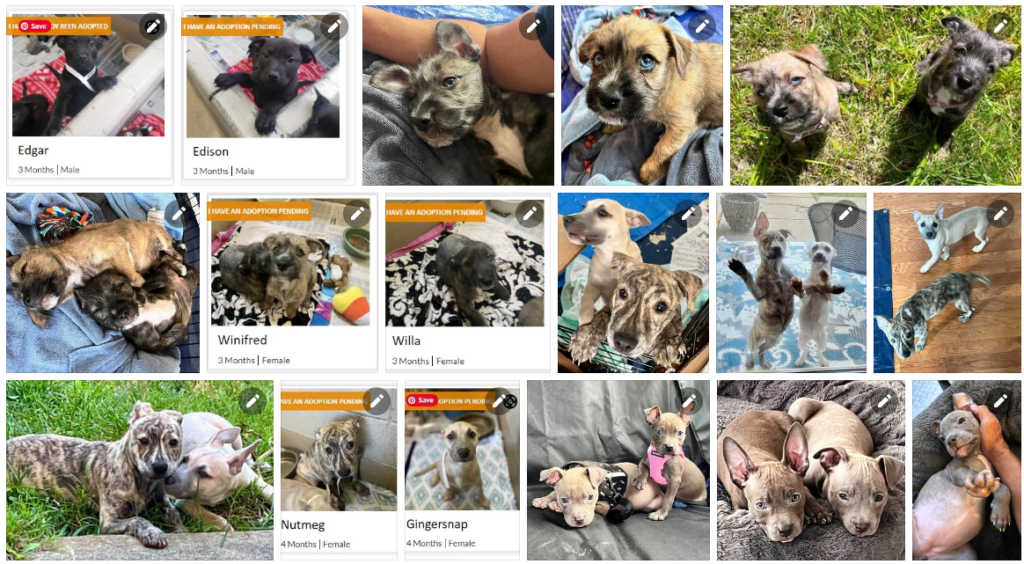
    As we slowly head into spring, a lot of animal shelters and rescues would consider this time as prime kitten and puppy season. Dogs that may have been kept inside or slowed down during the colder months are now out and about and doing, well, you know what! And typically that means an influx of unwanted, uncared for puppies, very sad. In all honest, in my area of North Carolina, the foster pups never really stop.

    So if you’ve thought about helping out and enjoyed my post on Fostering 101, here are some additional tips, what I would call Advanced Fostering! First things first, as a foster mom or dad, your job is not only to keep the puppers happy and healthy but also adoptable and socialized so that they will respond well when meeting prospective parents and families.

    And shockingly, you’d be surprised at how much additional work that is. If you think of an older dog, they’ve learned to do a lot of things you take for granted but what about puppies? They don’t even know how to dog yet. As a foster, you can help them along this path to find a forever home more quickly. Here are some hints below that I’ve learned over the past three years!

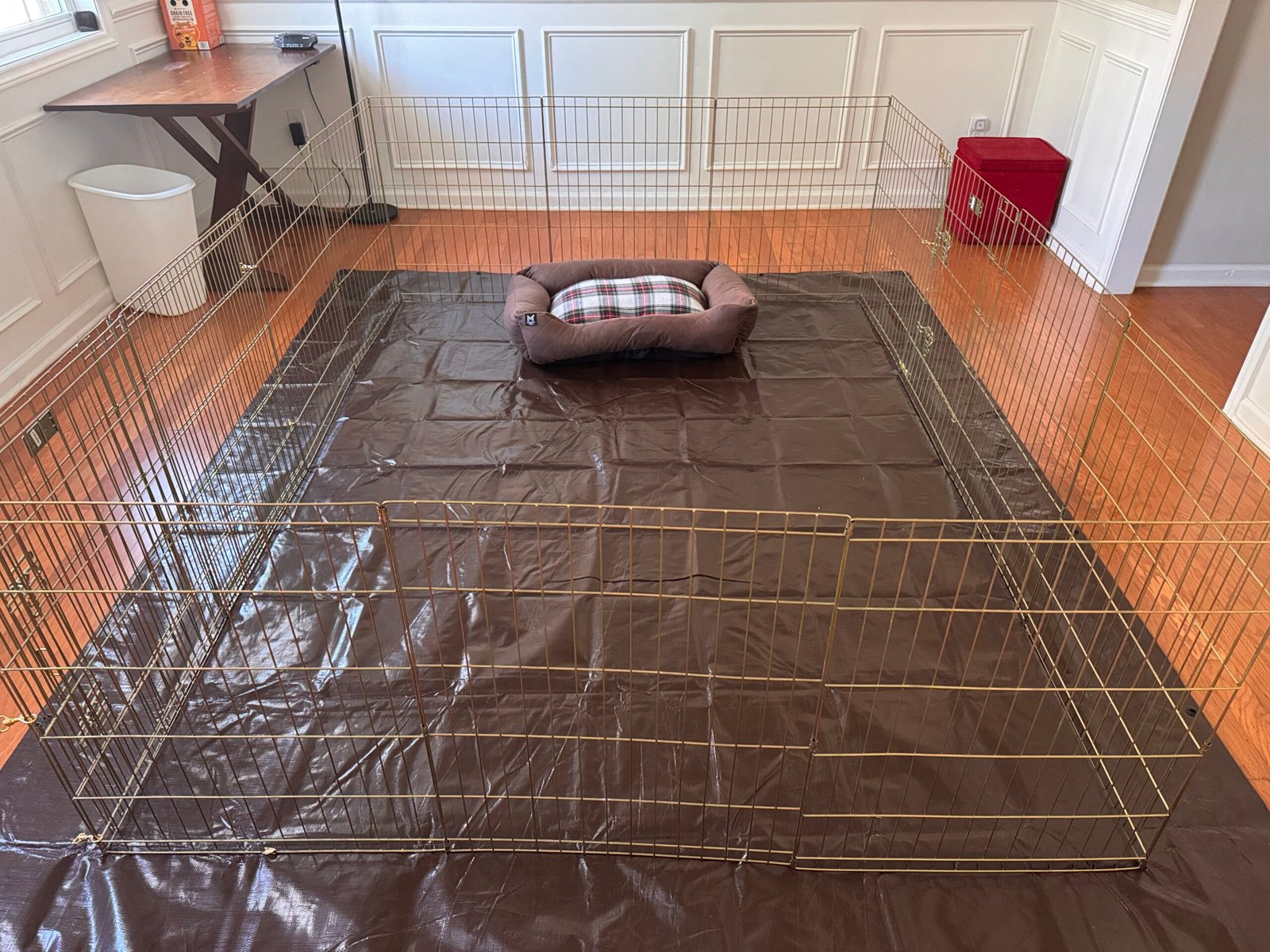
    Puppy pen/constraining – While everyone loves puppy kisses, the puppy pen or keeping them in one room is important for many reasons. One, you can keep the mess that happens (spilled food, water, waste) in one area and clean it. Two, you can prevent puppies from getting out and destroying things and/or consuming things they shouldn’t be. Leashes or being tied down is not cool since they could get hung up on a leash in their antics. I also keep a Blink cam pointed to my puppy containment area so I can track them remotely.

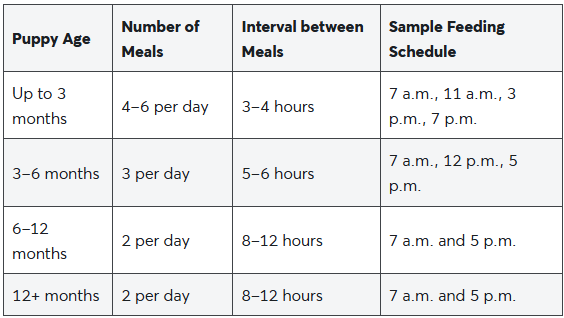
    Feeding – Puppies work best with a schedule and you should remove any food/water as you get close to bedtime (say 8pm). By scheduling regular feedings, you can control how much they eat all day and the associated pee/poo times. Check out the sample schedule below from rover.com! Most times pups will pee/poo within an hour or two of feeding times until they get older. Watch their stools for any signs of distress, worms (I know, gross), looseness or constipation. Feeding = pooping later on and is a good indicator of overall health. You’ll slowly work out a schedule where you feed, they pee-poo, and then it’s time for a snooze!

    Handling – You may not believe this but puppies have to be taught how to be picked up and held. They can be gawky but don’t always respond properly to you picking them up or dropping them down. They need to position themselves to do both and drop their feet when landing. Or holding them on your shoulder or in your lap. It’s all about teaching them the basics when being handled. Also I make sure they are used to getting their extremities handled: Ears, feet, paws, tail, they should be comfortable getting touched and a bit of grooming with a brush is also nice to help them enjoy human touch. But be aware that handling them may excite or over-stimulate them, so take notice.

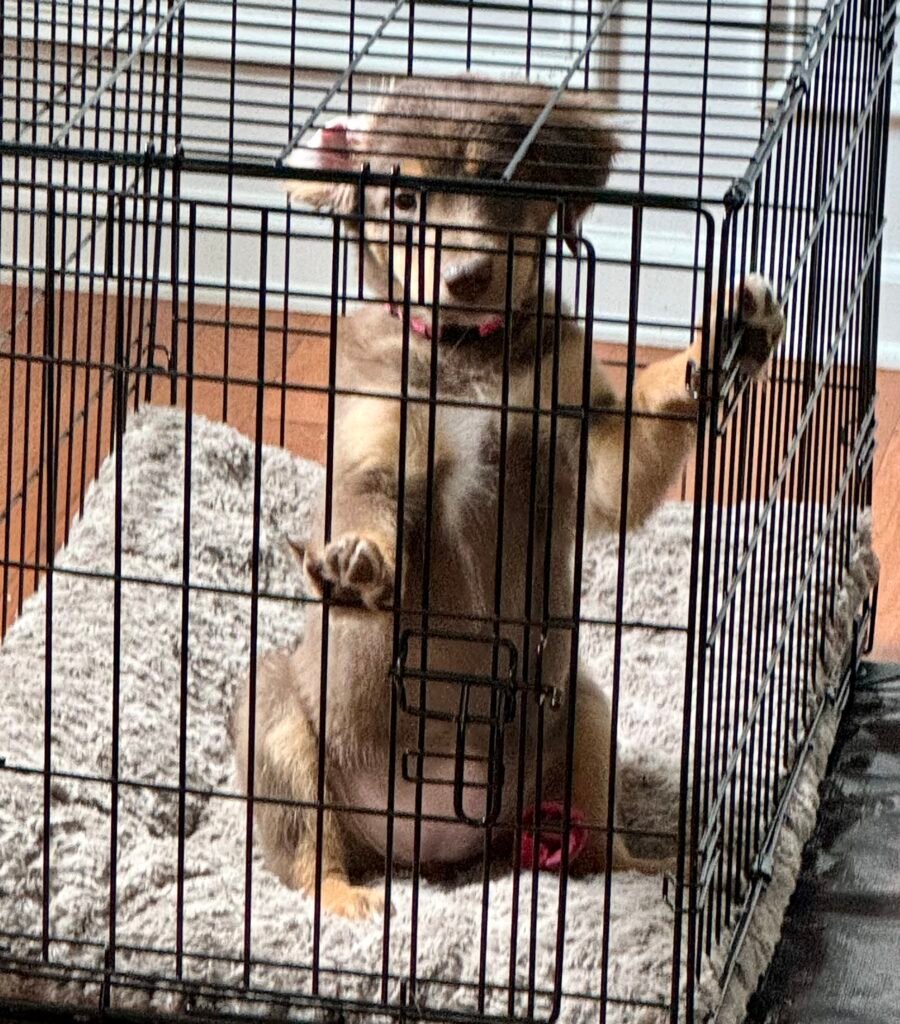
    Crating – The next step after the puppy pen, crating can help when you need to calm down the puppy and to housebreak them. The crate while it may feel like a prison to you, can be your pup’s safe space. Make sure it’s big enough for them to turn around in and padded. Encourage the pup to enter the crate with a treat and/or toy and they’ll start to associate the crate with positive things. A pup should be able to hold its pee or poo for 1 hour for each month of age. So the goal is to get them to hold their pee/poo and let them out after being crated so they associate going outdoors with pee/poo time. Believe it or not, that habit has to be learned, they need to move from pee pads to the outdoors.

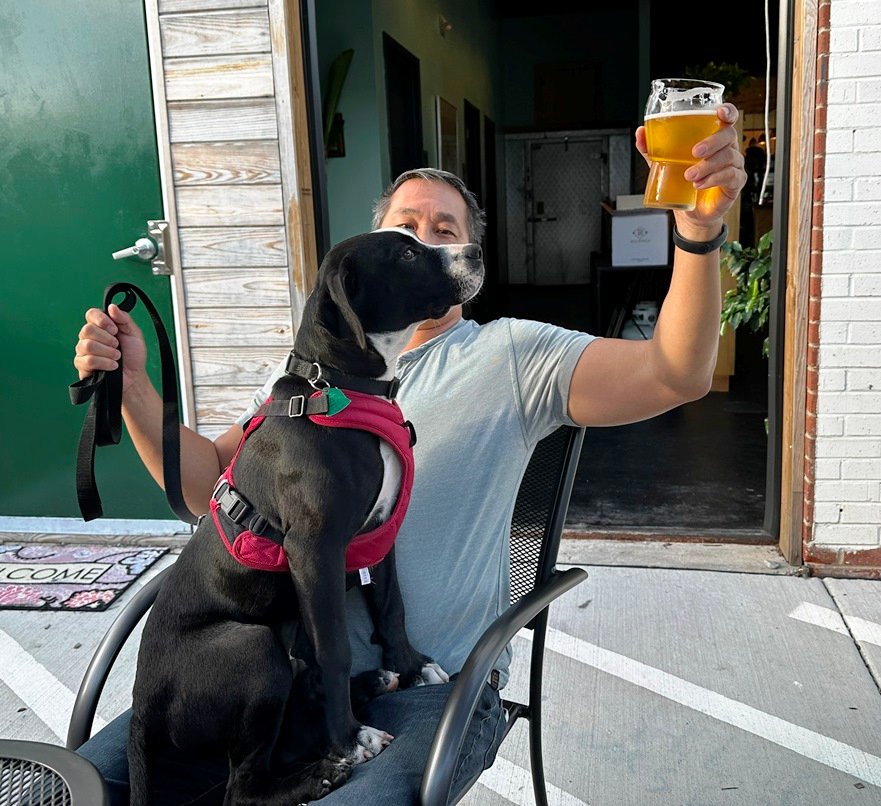
    Collars and leashes – Another step for your puppy, getting used to a collar/harness is learned and once they are used to it, you can lead them out for walks. And since puppies are easily distracted, they will need to learn to stay walking by your side and that a walk is another time to pee/poo along with exercise. Again, until your pup has is fully vaxxed (2 vaccinations) they should not be allowed into public areas where other dogs exist. There are a ton of diseases and illnesses they can contract until their immune systems are fully enabled with one of the worse being the deadly Parvo virus which can be contracted through dog waste.

    Socialization – Once your pup is fully vaxxed and healthy, it’s time to meet peoples and other pups! Once they are leashed and walking well, bring them to public dog-friendly spots where they can engage with others, 2-legged and 4-legged. Watch if they get overly excited, I’ve tried to minimize any head-butting, excessive jumping, nipping to keep the interactions controlled. It’s important that they learn to interact with other people and pups since foster pups that are friendly and relaxed will get adopted more readily. And obviously be careful and make sure you vet out any dogs they may interact with. One bad experience is one too many for your rapidly socializing pup!

    So there you go, beyond keeping your foster warm, healthy, and fed, as a pup parent you have a responsibility to helping them become better dogs with the types of habits and behaviors that will get them adopted. 95% of the time it’s all about the praise and rewards, a hard voice is all you really need for any negative correction. So good luck my foster friend, you are doing some great work here and it’s time to get that pup over the adoption finish line!

  • Pets 101: Tales of a First-time Foster, Stories of Sloppy Kisses, Play, Pee, and Poo

    Pets 101: Tales of a First-time Foster, Stories of Sloppy Kisses, Play, Pee, and Poo

    Now I don’t know about you but I definitely have a soft spot for animals in my heart. After losing my long-time friend and Bengal cat (Bear) at the end of 2021, I decided to try something different, fostering! I already had plans to foster and give Bear some company but now I was completely alone and my house seemed far too quiet. So I decided to commit to fostering to add a bit of love and chaos to my home.

    After stalking the Facebook page of my local SPCA organization I saw a litter of pups that looked interesting. I threw my hat into the ring as a back-up foster for these pups but lo and behold, I get a voicemail saying that they are mine! I pick them up on a late afternoon and bring them home. Now what?! Like an unprepared, first-time parent, there’s a bit of a panic initially. But if you’re a good person, you’ll figure things out as you go. Here are some tips/advice to get you started, based upon my first-hand learnings. While you can certainly foster cats (and I love them), this blog post will focus on dogs given my experience and primarily, puppies!


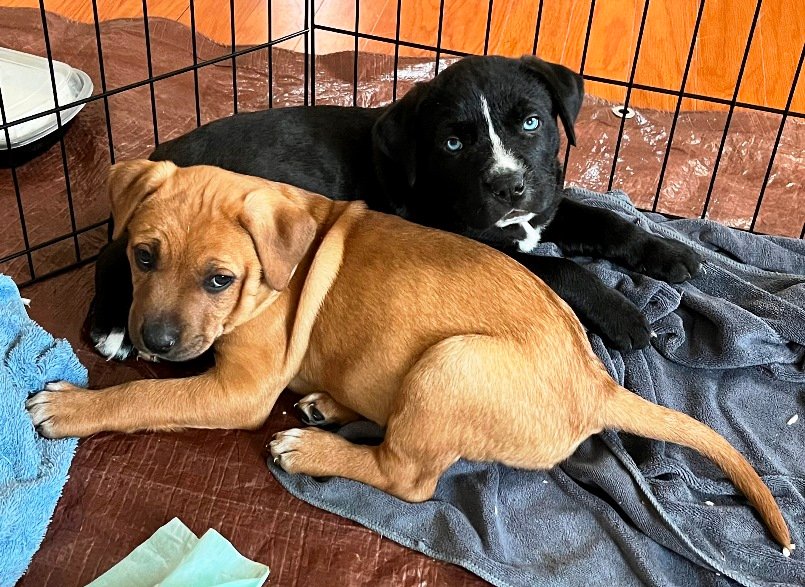
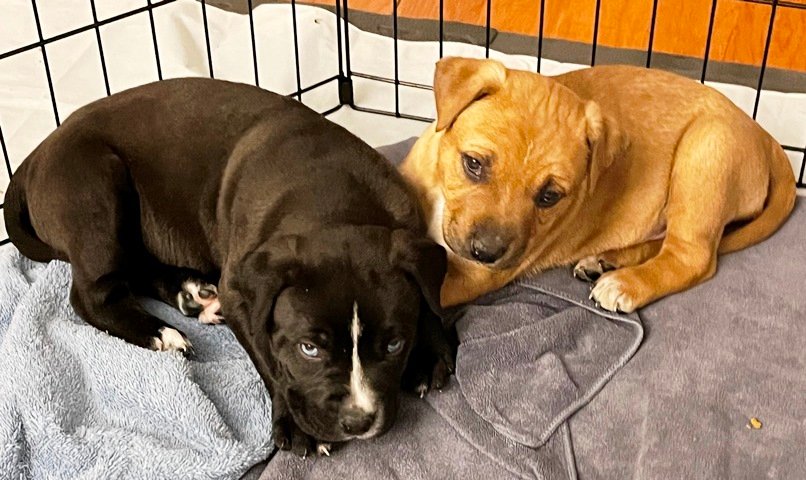
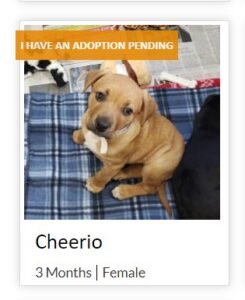
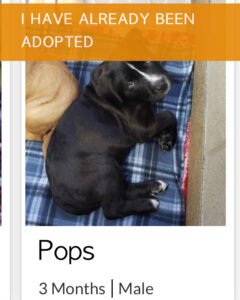
    Foster puppies, Pops and Cheerio resting up
    Foster puppies, Pops and Cheerio resting up

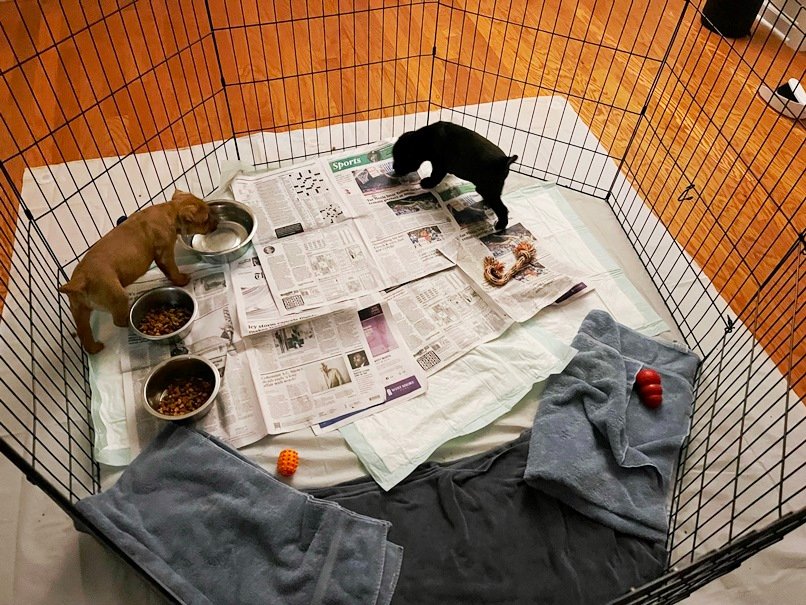
    So the first thing is where to keep your foster pups?  While the SPCA provided me a crate, I decided to go with a puppy pen in an empty dining room. You can purchase an 8-panel, 24″ to 30″ high playpen for about $40 on Amazon.com or Chewy.com  The playpens are made of black, wire metal panels, that unfold accordion-style into typically, a square shape or octagon shape. I placed my panel over some exercise pads (for cushioning) and then put a 4 mil tarp over it for water-proofing. I felt this gave me the best combination of soft surface and protection over my hardwood floors. An air purifier will help keep the stank down and I also had a clock radio to soothe the pups with music.

    Pops and Cheerio in their clean, new pen. Not for long...
    Pops and Cheerio in their clean, new pen. Not for long…

    Once the pen is set up, you’ll need some piddle (puppy) pads to handle their waste, some newspapers on top can also be helpful. I covered half of the puppy pen with pads! Note that the puppy pen has some weight to it but you may need to put some items around it, or else the pups will push it around. I personally used some heavier, metal items like a kettlebell and other items. I also put some older, bath towels in the pen for them to sleep on.

    Ok, now you’ve got the puppies in the pen, it’s time to eat! Yeah, puppies eat a lot because they are growing rapidly. First thing, understand that puppies usually gobble their food and then within 15 minutes or so, evacuate it. So while you can free-feed them (leave food in the bowl all the time), by scheduling feeding times, you may have better control over when they poo. And given that puppies often have diarrhea (6 for 8 so far for me), cleaning up poo as soon as it is deposited is a good idea. I fed my fosters a mix of dry and wet food, alternating the meals. And having tip-proof bowls with wide bases will help. Angry-hungry puppies will muck around with their bowls, expect spilled food and water. I also had a bag of pupperoni as a treat for my fosters. If your pups have GI issues, you may be able to get some meds (Pro-Pectalin Chewable Tablets) and/or probiotics to help calm them down.

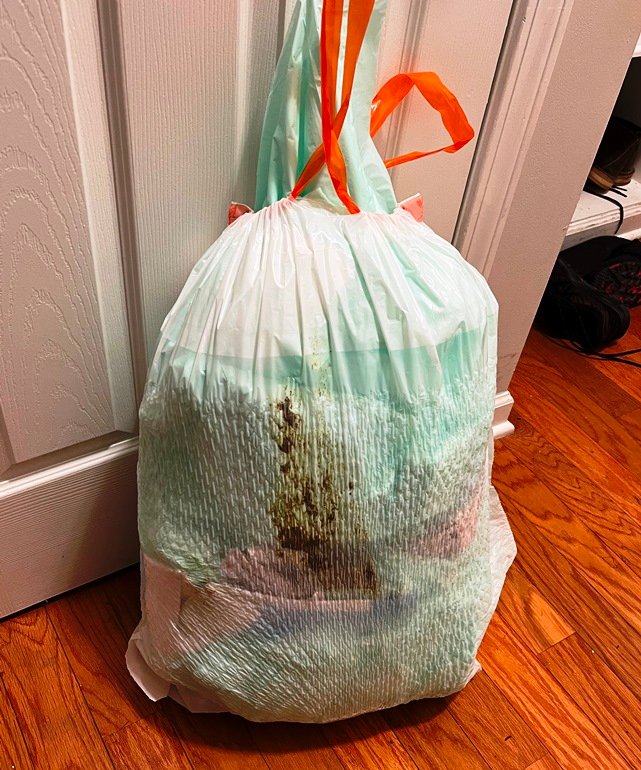
    Two days of poo pads and waste from two foster puppies
    Two days of poo pads and waste from two foster puppies

    Now once they’ve eaten or drunk, expect poo and/or pee. I used a mix of piddle pads with newspapers on top. The newspaper is good for poo, you can grab it quickly and dump it in the wastebasket. Or use a paper towel to grab a pile of poo. Piddle pads are good for the liquids but I would hate dumping a pad if it had a small poo deposited on it. So it’s hard to find the right mix of pads vs newspapers but do your best! As soon as my pups would poo, I would try to pull the newspapers out but as puppies are want to do, they will head over to wherever you are to play! So it was a battle of holding the pups off with one arm while trying to grab the waste and poo with the other hand. Yeah, they’ll step in it too in their playful excitement, ugh. Note that I’d expect 4 poos a day for each pup. You’ll be cleaning up a lot! And soiled spots would also get a shot of spray cleaner and wipe-down with a paper towel.

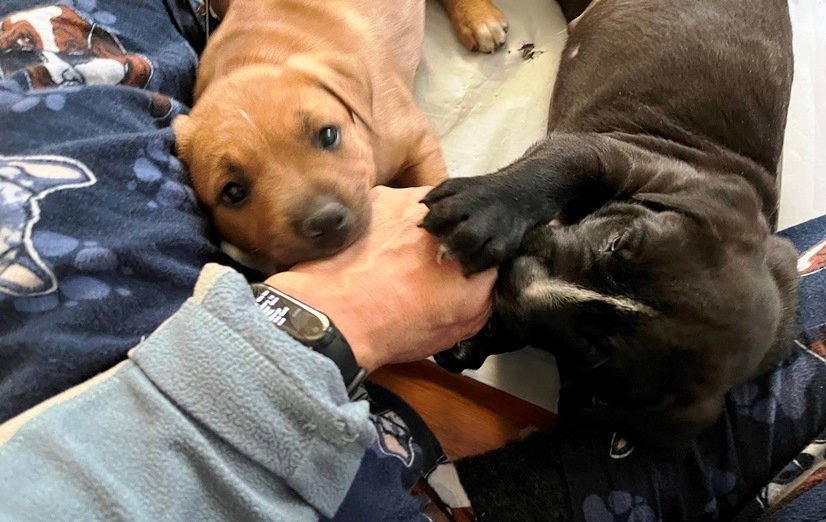
    Foster pups Cheerio and Pops, gnawing on my hands
    Foster pups Cheerio and Pops, gnawing on my hands

    Now that the pups have been fed and had their pen cleaned up, it’s time to play! Or what we call, socializing. Puppies need to be introduced to new experiences in a safe environment. I would usually find my pair of pups would have one alpha-dominant pup that would take the lead doing new things and then one more beta-submissive that would hang back and be tentative. As you can guess, one of your goals as a foster is to get BOTH of them more comfortable with handling and human interactions to get them adopted ASAP.

    I would either lean over and play with them in the pen and/or take them out several times a day, preferably after pooing. I’d also use diaper wipes to clean off their feet, tail, and fur before handling them for longer periods. Puppies like to chew on things so definitely make sure you let them know when they are biting too hard. Grab their feet and tail, boop their snoots, give them kisses, socializing is fun! I would also occasionally put their harnesses on and let them play in my small, fenced-in backyards for some more exposure to new things. The SPCA did not recommend introducing them to other animals for vaccination and health reasons. Note that as time goes on and your foster pups get bigger and more comfortable with things, they will likely get into more trouble.

    Foster puppies, Pops and Cheerio heading back to the adoption center
    Foster puppies, Pops and Cheerio heading back to the adoption center

    Now after about two weeks of fostering, you will get the call to bring the pups in. usually about 10 to 12 weeks old, they will get spayed and neutered and prepared to get adopted. I admit that parts of me were relieved when I got the call, and parts of me were sad. You get attached to the little guys pretty quickly and it’s a bit of a sad day. But that’s why you signed up as a foster, eh? And yes, you can foster fail and keep them but so far that hasn’t been the case for me.


    Now that you understand what being a foster entails, you can see it’s a lot of work and chaos. So why foster? That is the big question you’ll need to answer before jumping in! But if you’re an animal lover, you’ll be excited to know you can help animals that might otherwise be euthanized. In my area (Raleigh, NC), the SPCA of Wake County is constantly bringing in pups from kill shelters out in rural areas to a more urban setting with more resources (money, volunteers, potential parents). And once they get the pups to intake, they are whooshed out to foster parents.

    Fostering extends the amount of “space” they have to shelter pups. And it’s good for the pups to be broken out of their litters to develop their own personalities. You can imagine that the runt of a 12 pup litter would be super submissive. And of course, as a foster parent, you provide your time and energy, feeding, and caring for the pups so you are an extension of the shelter’s staff. As a bonus, you get to play with dogs and puppies on a temporary basis. Maybe you just like to save lives, maybe you like puppy kisses, or maybe you want to test-run having a dog. But fostering can benefit the community in many ways by giving shelters a lot more capacity (space, staff). So yes, fostering is a lot of work and a bit of stress but knowing you might have saved a life (along with sloppy kisses) is nearly worth it!

  • Real Estate 101: Making an Offer on a Home, Step 6

    Real Estate 101: Making an Offer on a Home, Step 6

    If you’ve made it to this point in the process and in this series of blog posts, congratulations! You’re ready to take the next big step, putting down an offer on your future home! And here’s where it also gets really tricky, especially in the real estate market of 2021. We’ve seen home-buying competition in a way that has NEVER been seen in decades due to a short-fall in new home building, shortages in lumber and a Millennial generation that’s ready to move out of apartments and into their first homes.

    So if you’re lucky enough to find a nice home within your budget and needs, congratulations. It’s time to get to work on a real offer to that home-owner and this will require some work but time is limited AND be prepared for some disappointment. Nice homes are usually getting multiple offers and yours needs to be competitive to stand a chance. And you’ll need to have your checkbook and cash ready if your offer is accepted as discussed in Step 2.

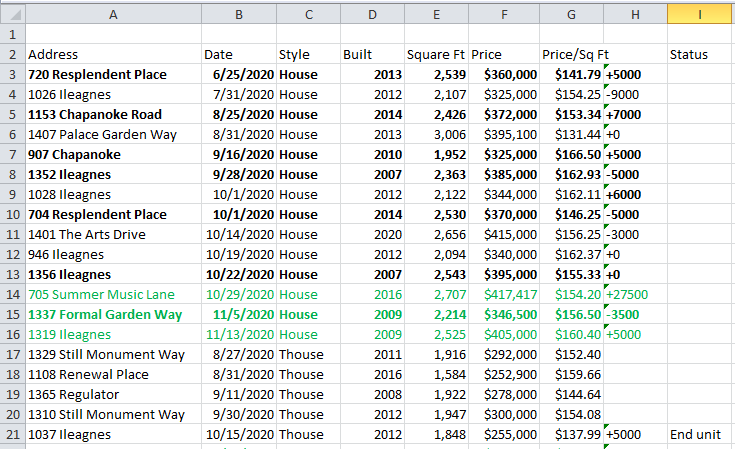
    To start with, let’s take a look at comps. Using Zillow or your realtor tools, take a look at the homes in your target neighborhood over the past 3 to 6 months. Try to identify homes that are about the same square footage, same age and same condition. Pop them into your spreadsheet with those basic details and calculate the price per square foot for each similar home to your target. With this baseline number, you can estimate what your target home may be worth.

    In the above example for Raleigh, I’ve got homes in my target range of $300k to $400k. And thankfully in this neighborhood, the home ages and sizes are pretty similar so the comps will be pretty accurate. You’ll have to have done this work beforehand since you’ll often have to submit an offer in short time after a house hits the market. You’ll also need to adjust based upon the specifics of your future home: Yard size, upgrades, overall condition, etc. In this spreadsheet, not only do I have the price per square foot but also documented the overbid situation. What was the home listed price and what did it actually sell for. Talk to your realtor about how hot the market is and what you may need for an over-bid situation. They will be hearing through the grapevine about what’s needed in your target neighborhoo.

    Next up is the details of the offer. You’ve established a price-value of your home but there’s a LOT more to your offer than just the sale price you’re willing to pay. You’ll need to package up all the details of why you’re a qualified buyer to position your offer, against all the other offers. Your pre-approval, down-payment size (some people are buying in CASH) along with contingencies (inspection, appraisal, loan, sale of your home), due diligence and earnest monies will all be part of the offer. And you’ll also define a due diligence period (time to inspect the home, this could be waived if inspections are waived or buying as-is) along with target close date. Note that in today’s hot real estate market, some buyers are going all in with cash and waiving inspections to purchase a home. Which means the buyer is assuming nearly ALL the risk, removing all the risk for the seller. But for most people, a contingent offer is likely.

    Your due diligence and earnest money will be needed if the offer is accepted and once accepted, the listing will be pulled as under contract. Due diligence money is needed for the seller to pull the listing and give you time to do your inspections and finalize your mortgage. Earnest money is ADDITIONAL money given to the seller to show your commitment to the purchase. If you back out at any point and time in North Carolina, you give up your due diligence money after going under contract. BUT you can get your earnest money back if you back out during the usual, 2 week due diligence and inspection period. Either way, the amount of money you offer to the seller as due diligence and earnest money shows how serious you are as a buyer. In today’s hot market, these amounts have increased to seriously high numbers. And that money needs to be ready to go, you’ll send the seller a bank or personal check once you’re under contract and the monies will be held in escrow.

    Once you’ve finalized the offer amount, due diligence and earnest money, your realtor will figure out additional details such as the due diligence period and closing date. You may have to schedule a mortgage appraisal visit, home inspection and land surveyor along with handling some other legal research in the due diligence period. Some sellers will want to close as soon as possible (if they’ve already sold, for example). Others may want a longer close if they still have to find a home. In some cases there are even rent-backs where you officially purchase the home but rent it back to the seller for some additional time if needed.

    As you can tell, the home offer is a crucial point in your new home search and when things really start to get sticky. You’ve gone from dreaming about your new home to finally making a commitment, both financially and emotionally. Ask anyone who has looked for a home in the past two years and you will hear tales of woe and happiness, the search for a new house will take you through many ups and downs. But hang in there! Because if your offer is accepted (fingers crossed), there is still a lot of work to do. In Part 7 of this series we’ll discuss the inspection, counter-offer and final closing. There’s still much to do but you’re moving forward!

  • Health 101: Taking My Shot, Tips and Tricks for your COVID-19 Vaccine

    Health 101: Taking My Shot, Tips and Tricks for your COVID-19 Vaccine

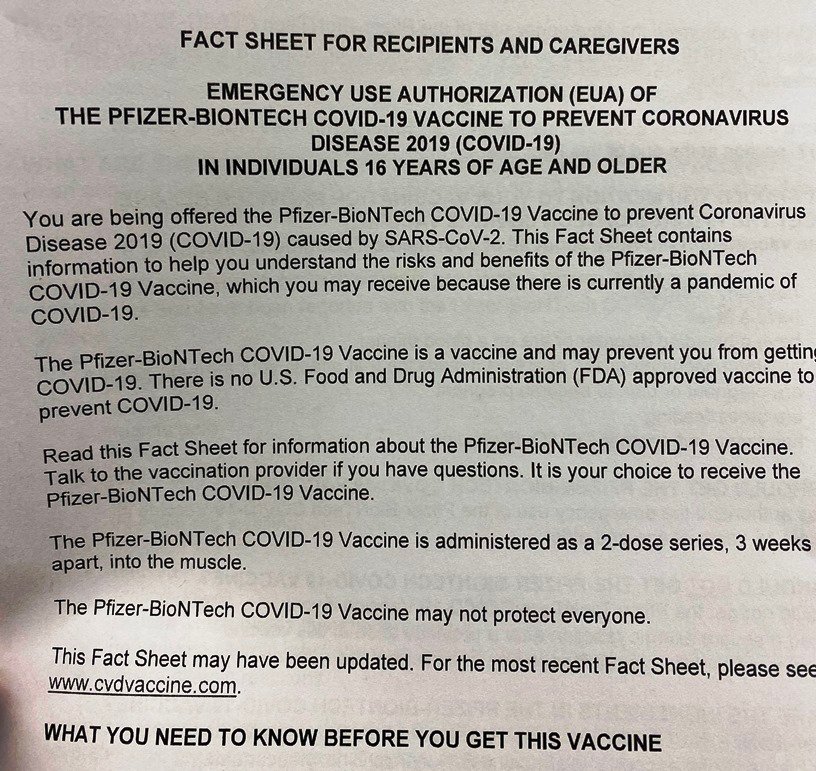
    For better or worse, the pandemic of 2020 has upended many things in life but also introduced some new skills for us. Working from home, gardening and now, signing up for your COVID-19 vaccination! I recently got my first Pfizer vaccination shot and it’s a great feeling that we might be getting back to normal really soon. Given the limited supply of vaccinations, they have been slowly rolled out in phases based upon risk and age developed by the CDC. I was in Group 4 in North Carolina due to my high blood pressure and I’ve never been so happy to have it! 🙂

    If you’re younger and healthy, you’ll more than likely be in the last group to be immunized and while the vaccination supply may be increasing, you may still need to pull some tricks to get scheduled. Understand the basics below:

    One, the vaccination is FREE regardless of insurance coverage. They may ask to see your insurance card (and government ID) but the vaccination is free.

    Two, each vaccination location will have an option or combination of vaccine types, the two-shot Moderna or Pfizer vaccine or the one-shot J&J vaccine. In some larger, healthcare organizations you may get an option as to which specific vaccine you get.

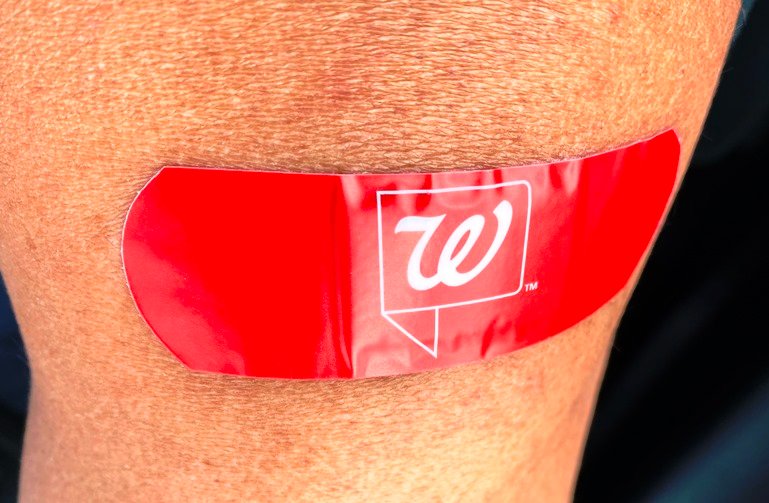
    Three, you can get a shot in any location available to you. Sign up wherever you can get an appointment based upon guidance from your county and/or state. I signed up with Wake County Public Health, a local hospital system and then ended up getting a shot at Walgreens when appointments became available. Research multiple options to get your vaccination scheduled. There are also public mass vaccination sites where you can do a walk-in or drive-in but usually there’s a wait involved.

    After you take the shot, they ask that you wait around for 15 minutes to make sure there are no adverse reactions. You should be given some information on what to do if there are any issues.

    To help you schedule your vaccination appointment, there are some anecdotal tips that I have learned. One, check during the early morning hours for new appointments. From midnight to 6am seems to be when new vaccination appointment schedules are loaded. Up late at night? Check to see if an appointment is available. Two, consider getting a shot in more rural/less populated areas. Demand for vaccinations are highest in the denser, urban areas of the country so heading out of town might be a good way to get scheduled for a vaccination. When I scheduled my vaccination, I was given two separate appointments for both shots.

    No matter where and how you get vaccinated, it’s a relief and the right thing to do for your community. These vaccines have been tested in clinical Phase III trials with over 250,000 people before being released to the public so they are as safe as possible. And when we all get vaccinated, we can all get back to life as usual, good luck!